You hear a familiar guitar riff buried under a modern beat, or a vocal line that feels like something you know from twenty years ago. Maybe you just want to know who actually wrote the song you have had on repeat all week. Either way, the credit information is out there, and most of it is free to find. The trick is knowing where to look and in what order, because songwriting credits and sample clearances are recorded in different places by different people.
Here is a workable routine, starting with the quickest checks and working towards the more detailed sources.
Start with the streaming services
Streaming platforms have quietly become one of the better first stops for credit information. On Spotify, open a track, tap the three dots, and look for "Show credits". You will often get a list of songwriters, producers, engineers and the publishers involved. Apple Music hides similar information behind the ellipsis menu; Tidal has traditionally been the most generous with credits, listing performers and production roles in detail.
Treat this as a starting point rather than the final word. Streaming credits are supplied by labels and distributors and are sometimes incomplete, out of date, or grouped under a single name. If a track has been re-released or remastered, the credits may not have been updated at all.
Check the songwriting databases
Songwriting is registered with collecting societies, and those registrations create searchable records. If you want to know who holds a share of a song, this is the level of detail you need.
- PRS for Music (the UK) has a public repertoire search covering works registered by its members.
- ASCAP and BMI in the United States both offer free song databases that are useful even for non-US writers, since many works are registered in multiple territories.
- GEMA (Germany), SACEM (France) and similar societies in other countries do the same for their members.
- Songview combines the ASCAP and BMI databases, which saves you a second search.
Search by title and you will usually see the full writer list, the publisher, and sometimes alternative titles the song has been registered under. Alternative titles matter more than you might expect: a song can appear under a working title that never made it onto the release.
Use the big general databases
For released commercial music, a handful of sites gather credits, samples and personnel in one place.
Discogs and MusicBrainz
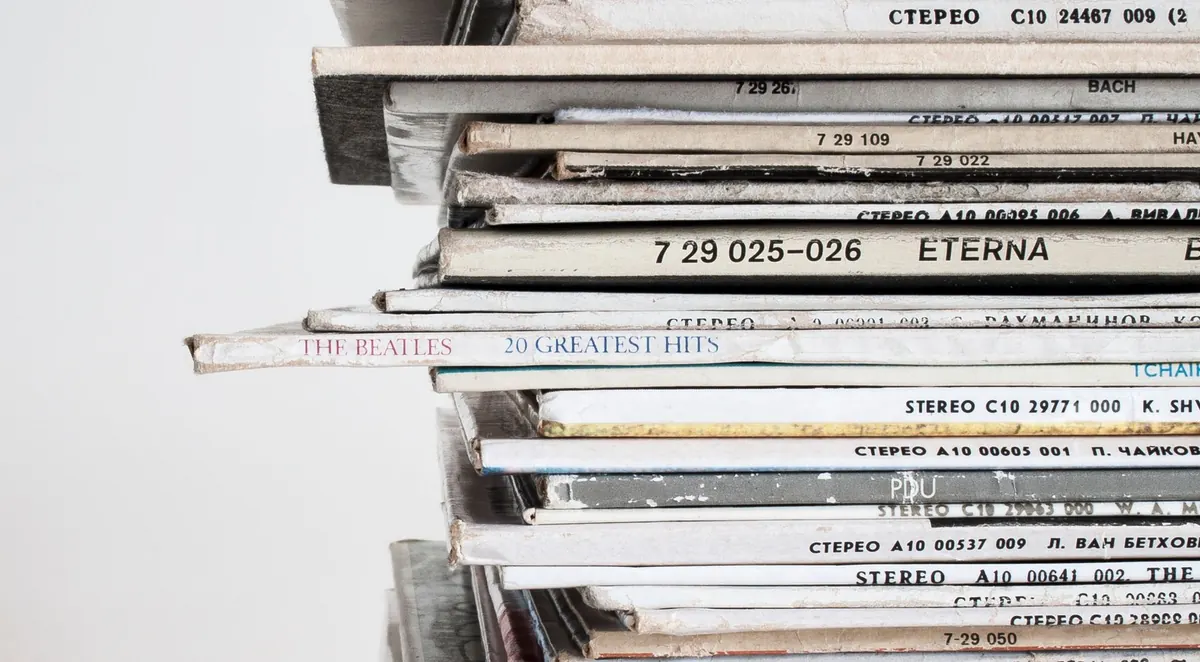
Both are community-built and excellent for physical releases. Discogs is strongest on vinyl, CD and cassette pressings, where the sleeve notes list producers, session players and studios. MusicBrainz is tidier but thinner on detail. Neither is official, so cross-check anything you plan to rely on.
SecondHandSongs and WhoSampled
These two specialise in the relationship between one recording and another. WhoSampled focuses on samples and interpolations in popular music, with timestamped listings for many entries. SecondHandSongs covers covers, versions and adaptations, which is helpful when a song is a translation or a re-recording rather than a direct sample.
Wikipedia and label press pages
Not glamorous, but often the fastest route to a full credit list, particularly for albums with detailed liner notes. Label press releases and artist social posts also frequently name producers and featured writers before the databases catch up.
Reading a sample versus an interpolation
The two terms get used interchangeably, but they describe different things, and the paperwork follows different routes.
A sample uses part of an existing recording. An interpolation re-performs part of an existing song.
If a new track lifts the actual drum break, vocal chop or guitar line from an old master recording, that is a sample. Two permissions are usually needed: one from the owner of the recording, and one from the writers of the underlying song. If an artist re-sings a melody or replays a riff themselves, that is an interpolation. It is a new recording, so only the songwriting side needs clearing, though the original writers must still be credited.
This distinction is why you sometimes see a long list of writers on a modern song that seems to have no obvious sample. A small interpolation of a hook can add three or four names to the credits.
Working backwards from the sound
When databases come up empty, your ears can do a lot. Try these in order:
- Search the distinctive lyric line in quotation marks, which often surfaces forum threads or reddit discussions that identify the source faster than any database.
- Look up the track on WhoSampled and check both the "contains samples of" and "was sampled in" tabs.
- Search YouTube for the song title plus "sample" or "breakdown" — producers and fans post side-by-side comparisons regularly.
- Check Genius annotations, which often flag interpolations even when the official credits do not.
- Look at the album's liner notes if you own a physical copy, or search for scans of the booklet online.
If a sound is clearly from a well-known record but nothing shows up anywhere, be cautious about assuming it has been cleared. Some releases quietly remove samples after the fact, and others are still in negotiation.
What to do when the credits look wrong
They sometimes are. Spelling variants, missing middle names, writers credited under a stage name, and producers listed as writers because of a production agreement all create confusion. If you are researching for a university project, an article or a licensing decision, gather two independent sources before you commit to a name. A streaming credit alone is not enough.
For anything with money attached — clearing a sample, releasing a cover, disputing a royalty split — the registration data and the contracts are what count, not what a website displays. Take proper advice from a music lawyer or your collecting society before acting on what you have found.
A quick routine to keep
Open the track credits on your streaming app, search the title on PRS or Songview, then check WhoSampled for sample links. That combination answers most questions in under five minutes. For anything you need to be certain about, follow it with Discogs, the label's own notes, and a second source. Write down where each detail came from as you go; you will thank yourself later when a name needs verifying.
Photo: Monoar_CGI_Artist / Pixabay